Small Group Training vs Big-Box Gyms in Lodi: Which One Actually Gets You Results?
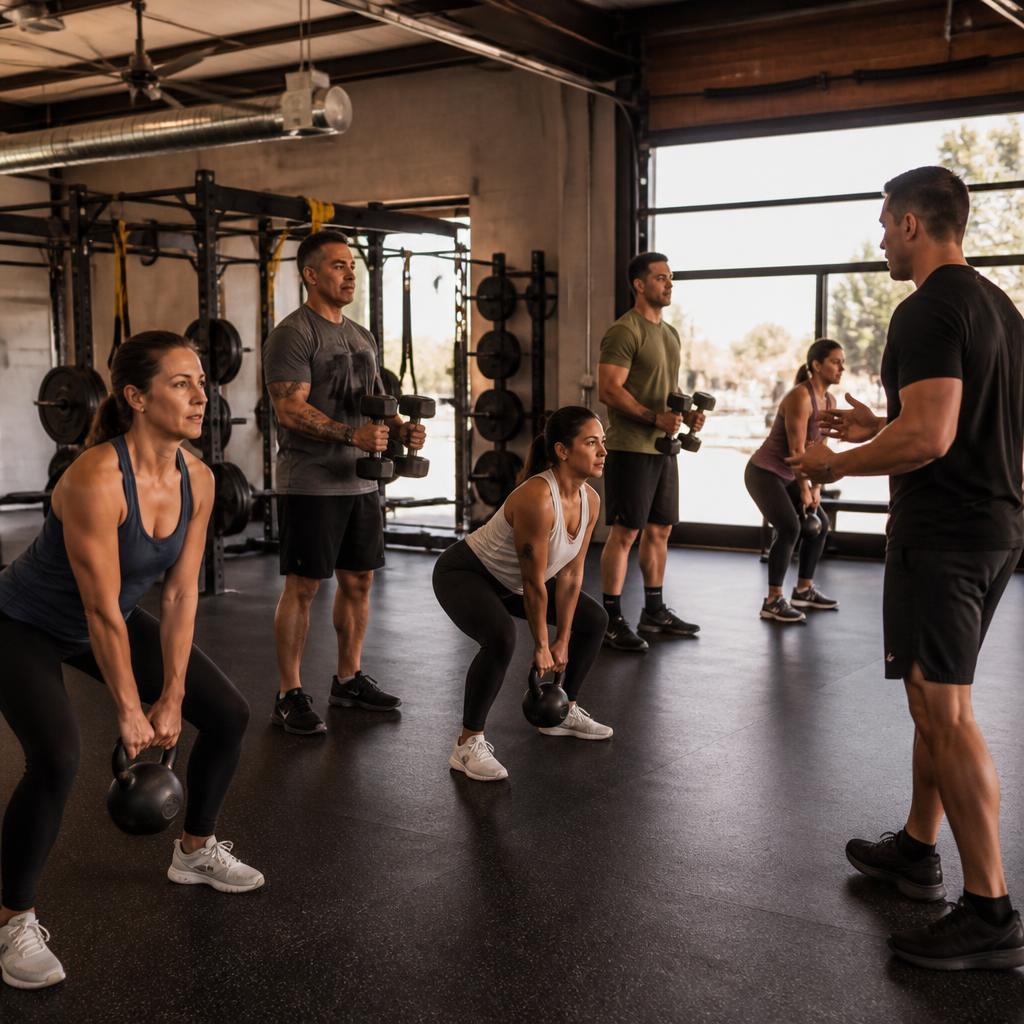
If you live in Lodi and you're trying to decide between joining a big-box gym or a coached small group training program, the price tag makes it look like an easy call. It's not. The cheapest membership in town is only cheap if you actually use it — and the numbers say most people don't. Here's how small group training and big-box gyms really compare, and how to pick the one that matches the results you want.
The Big-Box Gym Model
Big-box gyms are built for volume. Low monthly price, thousands of members, rows of machines, and a floor staff that isn't there to coach you. It's a proven business model — and part of why it works is that industry data shows the average gym loses roughly half its members every year. The gym doesn't need you to show up. It needs your card on file.
If you already know exactly what to do, love training alone, and never miss a session on your own, a big-box gym can absolutely work. For everyone else, the same problems show up on repeat:
- No plan. You wander from machine to machine hoping something is working.
- No coaching. Form breaks down, injuries creep in, progress stalls.
- No accountability. No one notices whether you came in this week.
- Crowded peak hours. The equipment you want is always taken.
The Small Group Training Model
Small group training is a coach-led class of roughly 6 to 15 people running the same programmed workout together. Every session has a warm-up, a strength piece, a conditioning piece, and a cool-down — all designed by a coach who is in the room correcting your form and scaling the workout to your level. It's the format the ACSM Worldwide Fitness Trends survey has consistently ranked as one of the top trends of the decade, because it delivers the coaching of personal training at a fraction of the cost.
Research backs up why it works. A study published in the Journal of the American Osteopathic Association found that participants in group fitness classes reported significantly lower stress and higher physical, mental, and emotional quality of life than people who worked out alone. Community is not a soft benefit — it's a performance variable.
Head-to-Head: Small Group Training vs Big-Box Gyms
- Coaching: Big-box, none included. Small group, a certified coach every session.
- Programming: Big-box, you build it. Small group, professionally designed and progressed.
- Accountability: Big-box, zero. Small group, coaches and classmates notice when you're gone.
- Injury risk: Higher when you're self-taught. Lower when a coach owns your technique.
- Cost per result: A $20 membership you use twice a month is more expensive than a coached program you actually finish.
- Time efficiency: 50 minutes, in and out, with a plan already written.
What Small Group Training Looks Like at Sierra Tango in Lodi
Our group workouts in Lodi are capped so every athlete gets eyes on them. Classes run early mornings, midday, and evenings — you can see the full class schedule here. Every session is coached, scaled to your ability, and built around functional strength and conditioning instead of random circuits. If you want more one-on-one attention, our private coaching layer stacks on top of the group program.
Which One Is Right for You?
Pick a big-box gym if you're an experienced lifter with your own program, high internal motivation, and no interest in coaching. Pick small group training if you want a plan that's already written, a coach who watches your form, a community that expects you to show up, and results that don't depend on your willpower on a bad day.
Try It Before You Commit
The fastest way to see the difference is to feel it. Grab our 7-day free trial and take a few coached classes. If it fits, we'll walk you through the membership that matches your goals. If it doesn't, you've lost nothing except a week of guessing at a big-box gym.