How Private Fitness Coaching Helps You Reach Your Goals Faster
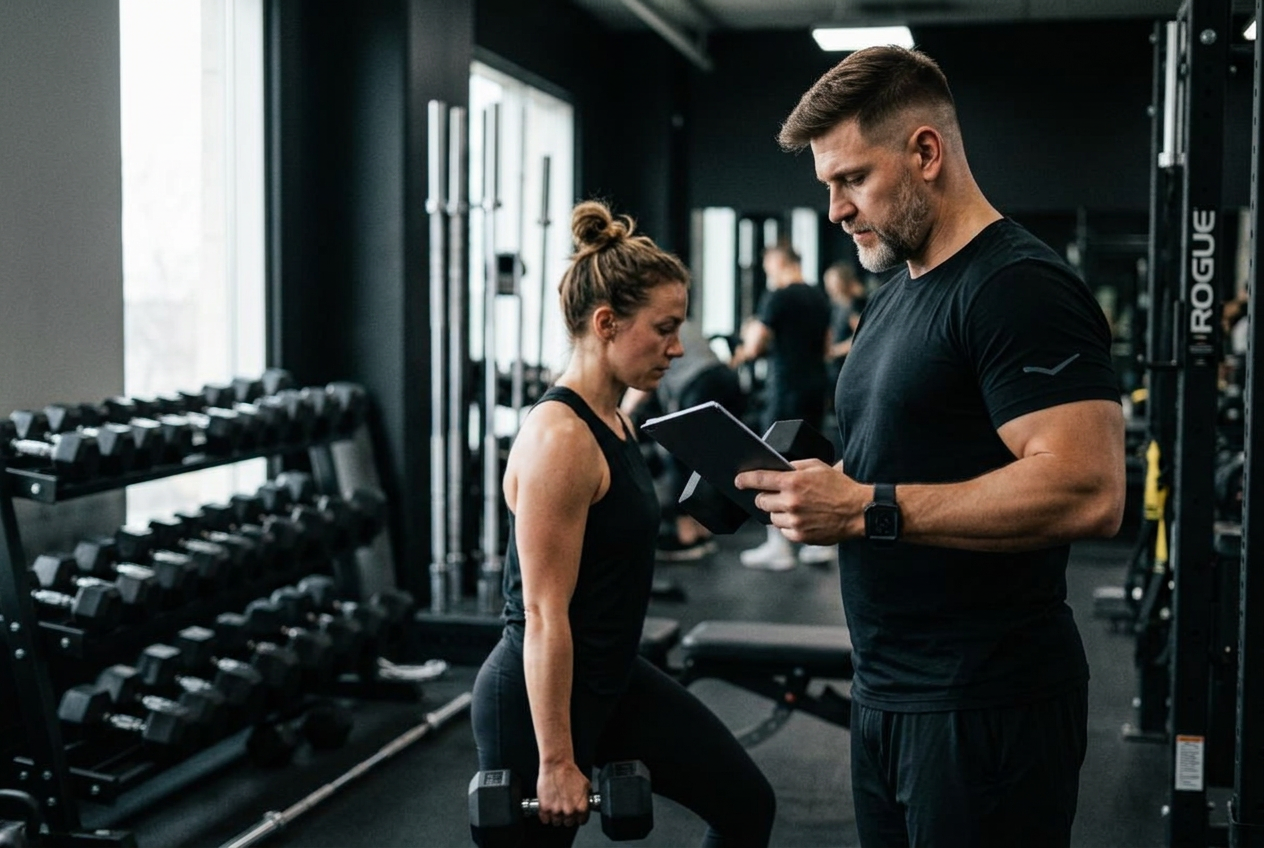
Most people don't stall because they lack effort. They stall because their plan was never built for them. Private fitness coaching fixes that at the root — one coach, one program, one set of goals — and it is the fastest way to turn consistent work into visible change.
What Private Fitness Coaching Actually Involves
Private coaching is not a spotter counting reps. It starts with an assessment — movement quality, training history, injuries, schedule, and what you actually want to change. From there your coach builds progressive programming, adjusts it as your body responds, and holds you to it between sessions with check-ins on training, nutrition, sleep, and stress.
1. A Program Matched to Your Body, Not an Average
Generic plans assume an average starting point that almost nobody occupies. A coach programs around your reality — a cranky shoulder, three available days a week, a desk job that shortens your hips. The American College of Sports Medicine is clear that training variables like intensity, volume, and frequency should be individualized to produce adaptation. That individualization is the difference between spinning your wheels and progressing every month.
2. Technique Corrected in Real Time
Bad reps still cost you the recovery — they just don't pay you back. A coach catches the rounding back, the knee collapse, the bar path drifting forward, and fixes it on rep three instead of after eight weeks of reinforcing it. Better positions mean more load safely, more load means more stimulus, and fewer injuries mean fewer forced restarts. Mayo Clinic is direct about it: effective weight training depends on proper technique, and poor form is what turns productive training into injury risk.
3. Accountability That Actually Changes Behavior
A scheduled session with someone expecting you is a far stronger commitment device than an intention. Weekly reviews also surface the real bottleneck — usually protein intake, sleep, or step count rather than the workout itself. The U.S. Physical Activity Guidelines for Americans put adults at 150 minutes of moderate activity plus two strength sessions per week; coaching is what makes that a habit instead of a target you read about.
4. Faster Course Corrections
Training alone, a plateau can go unnoticed for two months. A coach watching your numbers sees it in a week and changes a variable — volume, rest, tempo, calories — before it costs you a quarter of the year. Speed of iteration is the quiet advantage of coaching.
5. Progress You Can Measure
Scale weight is a noisy signal on its own. Coaching tracks strength on key lifts, body composition, waist measurements, conditioning markers, and how you feel and move day to day. When you can see the trend, motivation stops depending on how you look in the mirror on a given morning. That's the framework behind our goal tracking system.
Is Private Coaching Right for You?
- You're new to training and want to build correct patterns from day one instead of unlearning them later.
- You've been training for years and progress has flattened.
- You're working around an injury or a past surgery and need programming that respects it.
- You have a deadline — an event, a wedding, a season — and can't afford a wasted month.
- You need the appointment to make training non-negotiable.
Getting Started in Lodi
Our private coaching program begins with a session where we assess how you move, talk through your goals and schedule, and build your plan before you commit to anything. Many clients pair one-on-one sessions with group training for extra weekly volume — you can see how those fit together on our personal training in Lodi page.
The Bottom Line
Private fitness coaching compresses the timeline. You skip the trial-and-error, train with better positions and better programming, and have someone tracking whether it's working. If you want to know what that would look like for your goals, book a short intro call and we'll map your starting point together.